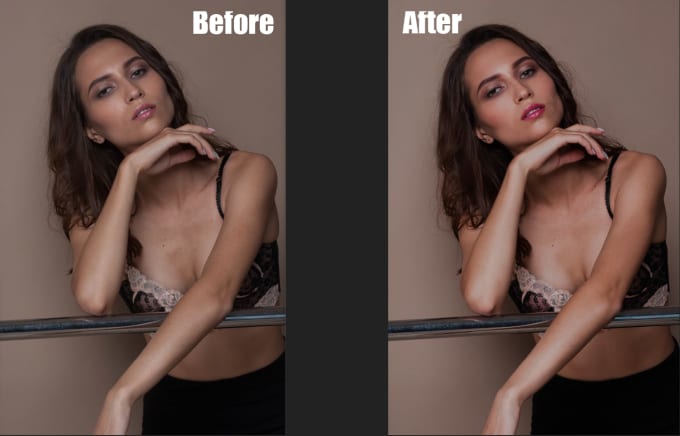
We live during a time of stunning mechanical headways in the visual innovation fields. Photograph camera models reestablish themselves every year with the guarantee of more uber pixels and new highlights.
But then, all things being equal for a minute, the photograph that leaves every one of our advanced camera models most occasions has qualities and shortcomings that continue through all the progressive models that experience our hands.
Computerized Cameras and by and large all photographic cameras are, in spite of the majority of the showcasing buzz, still extremely restricted machines. For instance, they register our reality with sensors that can just catch a small amount of the tonal range that our eyes can see.
Envision yourself on a bright day before a delightful scene:
Underneath you, around your feet, you can see the rich lavish green vegetation; above you, the brilliant blue skies. As we think about this scene, our eyes can see all its wealth, the subtleties in both the shadows and the splendid mists above. The dynamic range that our eyes can process, which goes from the darkest to the most splendid zones, is sufficient to contain a large portion of the rich detail in that scene.
Presently snap your picture camera and snap a shot from your position including both the vegetation and the sky. The outcome is exceptionally telling. Contingent upon the parameters that either the camera or you pick, some detail of the scene will be gone from the outcome. Either parts of the vegetation will mix to dark and lose all detail or parts of the sky will mix to white and lose all detail.
The Limits of Photo Cameras:
In rundown, the retina of the camera, its computerized sensor, which catches the light of the scene, isn’t fit for managing a tonal range as huge as our eyes can. It can just catch the full detail in a little range that can be situated at various dimensions of splendor by the camera itself or us.
Hence, in a scene like the one depicted over that has an enormous differentiation, it winds up catching the detail just at the features and mid-tones, or for the most part at the mid-tones, or predominantly at the shadows and mid-tones. It just can’t catch at the same time the full detail of the scene from the darkest to the most splendid territories.
This is obviously an improvement of a situation that we could depict in substantially more detail. In any case, the end is as yet the equivalent. When we take a gander at the last photograph, we understand that what we saw with our eyes isn’t what the photograph appears.
That lavishness of detail wherever is gone. Furthermore, this is only one of the confinements that all Photo cameras share. We could proceed to portray numerous others identified with shading exactness and different territories where cameras just can’t adapt to the profundity and extravagance of our general surroundings.
Carrying the Photo closer to what we recall:
On the one hand, photograph correcting is the craft of taking that underlying photograph and dealing with it by different intends to carry it closer to what our eyes saw when we were before that delightful scene. Retouching is the art of taking that initial photo and working on it by various means to bring it closer to what our eyes saw when we were in front of that beautiful scene.
Photograph modifying connected to the situation depicted above is, for instance, the specialty of controlling the picture we caught and making progressively unmistakable a portion of the subtleties that nearly vanished because of the confinements of our photograph camera.
It empowers us also to upgrade the shade of the image and carry it closer to what our eyes delighted in. So, modifying enables us to snap the picture and make up for the confinements of our camera. It gives us the likelihood to attempt and bring the last outcome as close as conceivable to what we recollect.
Two key focuses here:
First, modifying isn’t synonymous with Photoshop. Photoshop is the most prevalent of the devices utilized in our computerized age to correct photos. In any case, correcting should be possible from multiple points of view.
Either with the numerous product items accessible available or by handling the computerized yields in different ways, for example, printing and filtering the photograph progressive occasions incorporating physical mediations in the center to adjust various properties of the picture.
The second point is that when we talk about what we recall from the scene – we need to consider the mental ramifications of that announcement. It has been demonstrated that frequently when we recall an excellent nature scene, we recollect it greener and more soaked in shading than it truly was.
In this manner, when we modify that photograph, would it be a good idea for us to control the yield to approach what we recollect from the scene, or what the scene genuinely resembles when we remain before it.
Be that as it may, nobody can say what the scene really resembles:
For every one of us, the experience of seeing something will be totally extraordinary. Besides, what we recollect from our visual association with the scene will likewise be distinctive for every one of us as vision is genuinely relative.
We should recall the case of the individual who is encased in a room painted totally red and with nothing else inside to contrast that shading with. The individual will be unfit to see that red shading until we present something with which he can think about it.
Thus, on the off chance that we are correcting an image for ourselves, we will endeavor to carry that picture nearer to what we recollect dependent on our very own understanding. In the event that we are modifying it for another person.
We may either carry that scene closer to what for the most part is acknowledged as appealing for such a situation or we may ask the customer whose photograph we are correcting the subtleties of his/her view of that scene and afterward control the outcome towards that heading.
Moving Beyond what we see:
On the other hand, modifying enables us to go past the main point and improve reality in vast ways. As we referenced beforehand, vision is relative. We as a whole recollect a similar scene in various ways.
That rich green vegetation will be recalled by a few of us as more immersed in shading than by others, some will recollect it increasingly yellow and others greener. Some will recollect the vegetation to be more splendid and others darker.
Some will significantly recall it bigger and others littler. This is every one of the a result both of the science of our eyes and of the ceaseless separating that our mind performs on our impression of our general surroundings.
Contingent upon the significance and reverberation that our various recollections have on us, the mind will recall various situations in various ways. In this manner we can abridge by saying that once we leave a scene, its portrayal in our brains begins to get contorted.
What we recollect is a blend of the sifting and handling performed by our cerebrum in addition to how our mind needs to recall that input. All things considered, most occasions what we recollect has little to do with the real physical information we had before us.
Same human characteristic:
This exceptionally same human characteristic that at first may sound somewhat aggravating is likewise what powers our creative mind and our ability to imagine, to make, to grow past what we see. It enables us to mix, interconnect, partner and produce thoughts and pictures that we have never found, all things considered.
Also, here is the place modifying again turns into a very useful asset. Not exclusively would we be able to begin from that underlying photograph we snapped with our camera and assume responsibility for the mutilation that happens normally in our brains, however this time we can change the picture intentionally in whatever ways our creative mind recommends.
We can make a blue shirt red:
We can extend that woodland of trees and make it multiple times bigger. We can put a sea around our home or concentrate a figure from its experience and make it fly through the skies. The conceivable outcomes are unfathomable.
In that capacity, from this second viewpoint, correcting turns into an awesome method for outwardly envisioning, investigating, making and growing thoughts. The craft of correcting, depicted from these two edges, is an artistic expression that requires cognizant idea and basic leadership techniques.
We need to choose what parts of the image we will take a shot at and what style of correcting we will perform. Will it correct that will go unnoticed and just upgrade the image without pointing out itself? Or on the other hand will it modify that intends to change the picture into something totally out of our creative mind and in this way will mean to look astounding and new in an exquisite manner.
An expert photograph retoucher works with the picture like a specialist:
Exclusive service on fiverr By vladimirmandic
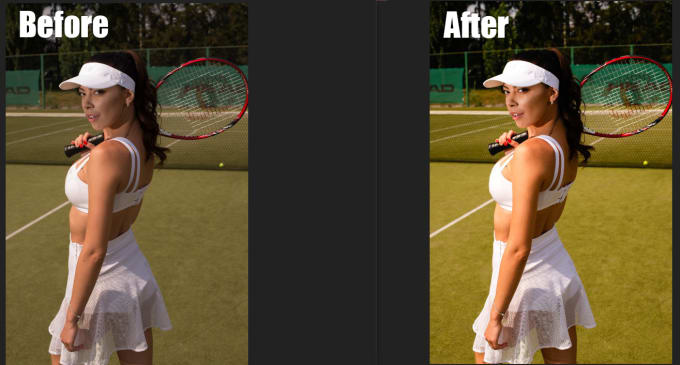
He should work cautiously with his electronic brush, fixing, redressing, mixing and changing the picture in unobtrusive ways that gradually change it similarly as a dusk or a dawn gradually progress into another reality without abrupt changes that could point out themselves. All things considered, crafted by an expert photograph retoucher is like crafted by a painter, a stone carver or an artist.
Accuracy work brimming with innovativeness and center that expects to do what our photograph cameras couldn’t do; Enhance and change the photograph nearer to what our eyes delighted in and our brains recollect.
Modifying can cover a boundless cluster of medications:
Including essential shading revision, top of the line magnificence correcting, skin modifying, make-up improvement, allure correcting, lighting upgrade, photograph montages, picture modifying, eyes correcting, photograph outline, photograph rebuilding.
Clean up, magazine photograph correcting, photograph cartooning, foundation extractions, harmed photographs reclamation, wedding photography modifying, all encompassing photography, photograph depictions, other enhancements thus substantially more. Know more visit the official website http://bit.ly/2QRuZhI
Some online administrations offer negligible computerized essential correcting administrations like programmed shading and differentiation upgrades. These perform nonexclusive mechanized remedies to a picture and neglect to create ideal outcomes for a similar reason that every robotized procedure in life neglect to adjust to the one of a kind individual conditions of a subject, for our situation a picture.
 Deeify