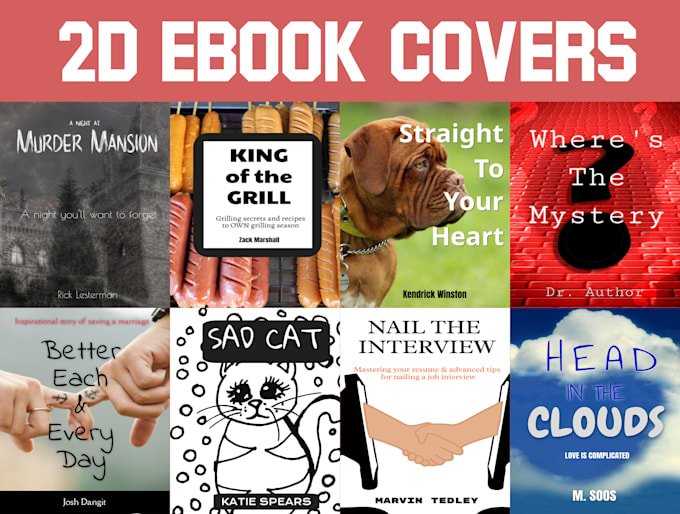
Graphic design is a profession whose business is the act of designing, programming, and create visual communications, generally produced by industrial means and intended to convey specific messages to specific social groups, with a clear purpose.
Visual depiction is a calling whose business is the demonstration of structuring, programming, and make visual correspondences, for the most part created by modern methods and proposed to pass on explicit messages to explicit social gatherings, with a reasonable reason.
This is the movement that empowers graphically convey thoughts, realities and qualities handled and blended as far as structure and correspondence, social, social, monetary, stylish and innovative. Otherwise called visual correspondence structure, since some partner the word figure just to the printing business, and comprehend that visual messages are diverted through numerous media, not simply print.
Given the enormous and quick development in the trading of data, the interest for visual originators is more noteworthy than at any other time, especially on account of the advancement of new innovations and the need to focus on the human factors that are past the capability of specialists who create them.
A few orders are generally utilized visual communication: publicizing structure, article plan, corporate character configuration, website composition, bundling plan, typographic structure, signage structure, media plan, among others.
Visual communication History:
The meaning of the visual communication calling is somewhat later, in what concerns their arrangement, their exercises and objectives. Despite the fact that there is no agreement on the careful date of the introduction of visual computerization, some dating during the interwar period. Others comprehend that starts to distinguish accordingly to the late nineteenth century.
Apparently explicit realistic correspondences purposes have their inception in Paleolithic cavern works of art and the introduction of composed language in the third thousand years BC. C. Be that as it may, the distinctions in working strategies and preparing required helper sciences are to such an extent that it is preposterous to obviously recognize the present visual planner with ancient man, with xylograph fifteenth century or the lithographer 1890.
The decent variety of supposition mirrors the way that some observe as a result of visual communication and all other graphical showing just those that emerge because of the utilization of a model of mechanical creation, those visual indications that have been “anticipated” mulling over necessities of various sorts: profitable emblematic ergonomic relevant and so on.
Foundation:
Folio 114, with adorned content contains the Tunc dicit illis. A case of craftsmanship and page design of the Middle Ages. A Bible manually written luxuriously delineated by Irish priests in the ninth century CE-is for nearly a wonderful and early case of visual depiction idea. It is a realistic show of extraordinary imaginative worth, high caliber.
The Book of Kells:
That even a model for figuring out how to plan for even outperforms in quality to a considerable lot of the current-publication preparations, and furthermore from a practical perspective contemporary This realistic piece reacts to all needs displayed the group of individuals who made it, anyway others accept that it would be visual communication item, since they comprehend that their structure isn’t changed in accordance with the possibility of current visual computerization venture.
The historical backdrop of typography:
The historical backdrop of the book-is firmly connected to visual depiction, this might be on the grounds that there are essentially no illustrations plans that do exclude such things designs.
When discussing the historical backdrop of visual communication, typography additionally refered to the Trajan section, medieval miniatures, Johannes Gutenberg’s printing press, the development of the book business, the publications Parisian Arts Movement and Crafts (Arts and Crafts), William Morris, Bauhaus, and so forth ”
The presentation of portable kind by Johannes Gutenberg made books less expensive to create, and encourage their spread. The first printed books (incunabula) scored the good example to the twentieth century. Visual depiction of this time has turned out to be known as Old Style (particularly the typefaces which these early typographers utilized), or Humanist, because of the overwhelming philosophical school of the time.
After Gutenberg, no noteworthy changes were seen until the late nineteenth century, especially in Britain, there was a push to make a reasonable division between the fine and connected expressions.
In the nineteenth Century:
First page of the book “The Nature of Gothic” by John Ruskin, distributed by the Kelmscott Press. The Arts and Crafts proposed to restore the medieval workmanship, motivation in nature and difficult work.
During the nineteenth century visual message configuration was depended on the other hand two experts: the craftsman or the distributer. The first was shaped as a craftsman and the second as a skilled worker, frequently both in similar schools of expressions and specialties. For the printer as workmanship was the utilization of decorations and choosing textual styles imprinted in his sytheses. The craftsman considered typography to be a tyke and giving more consideration to decorative and illustrative components.
Somewhere in the range of 1891 and 1896, the William Morris Kelmscott Press distributed the absolute most huge realistic items Arts and Crafts Movement (Arts and Crafts), and built up a rewarding business dependent on the structure of books of incredible elaborate refinement and offering them to the privileged societies as extravagance things. Morris demonstrated that a market existed for works of visual communication, setting up the partition of structure from creation and the expressive arts. Crafted by the Kelmscott Press is described by its diversion of memorable styles, particularly medieval.
First Vanguards:
Blurb for the Moulin Rouge in Paris. Made by Henri de Toulouse-Lautrec with shading lithography in 1891. On account of Art Nouveau, visual computerization and visual clearness picked up by the piece. Isotype of the Bauhaus. Established in 1919 by Walter Gropius, is viewed as the origin of the visual computerization calling.
Given Poster for Matinée. Made by Theo van Doesburg in January 1923. The free textual style association, communicates the soul of the Dada development, unreasonableness, for opportunity and restrict business as usual and visual articulations of the time.
Corporate personality plan for Lufthansa, by the Development Group 5 of the HFG Ulm. Ulm School was an articulation point ever of, since there is laid out the structure calling through logical strategy. Current pictograms plan for the National Park Service of the United States. The plan to rearrange the images structures created during the 1950s.
The structure of the mid twentieth century, just as the expressive arts of a similar period, was a response against the debauchery of typography and plan of the late nineteenth century.
The enthusiasm for ornamentation and the multiplication of estimation changes and typographical style one piece plan, synonymous with great structure, it was a thought that was kept up until the late nineteenth century.
The Art Nouveau, with its unmistakable want expressive was a development that added to higher request visual creation. While keeping up an abnormal state of formal multifaceted nature, did as such inside a solid visual consistency, disposing of the variety of typographic styles in a single realistic piece.
Workmanship developments of the second decade of the twentieth century:
Exclusive service on fiverr By soos4real

The political disturbance that went with them, created emotional changes in visual communication. The Dada, De Stijl, Suprematism, Cubism, Constructivism, Futurism, the Bauhaus and made another vision that impacted all parts of the visual expressions and plan.
Every one of these developments contradicted to the enlivening expressions and mainstream, just as the Art Nouveau, which affected by the new enthusiasm for geometry advanced into the Art Deco. Every one of these developments were a revisionist and transgressive soul in constantly. This period likewise distributions and proclamations multiplied through which specialists and teachers communicated their suppositions.
Configuration Schools:
Jan Tschichold exemplified the standards of present day typography in his 1928 book, New Typography. He later disavowed the way of thinking introduced in this book, calling it fundamentalist, yet stayed extremely powerful. Herbert Bayer, who dirigó from 1925-1928 the typography and promoting workshop at the Bauhaus, made the conditions for another calling: the visual planner.
He put the subject “Promoting” in the instruction program including, in addition to other things, the investigation of publicizing media and the brain research of promoting. Outstandingly, the first to characterize the term Graphic Design was the planner and typographer William Addison Dwiggins in 1922.
Along these lines Tschichold, Herbert Bayer, László Moholy-Nagy, and El Lissitzky moved toward becoming guardians of visual depiction as we probably am aware it today. They spearheaded generation strategies and styles that have been utilizing later. Today, PCs have significantly changed generation frameworks. Know more visit the official website http://bit.ly/2RlkMub
Yet the methodology that added to test configuration is more applicable than any other time in recent memory dynamism, experimentation and even quite certain things like picking text styles (Helvetica is a restoration, initially a Typography configuration dependent on the nineteenth-century mechanical) and symmetrical pieces.
 Deeify